Chicken eggs are one of the most consumed foods in the world. Nutritious, versatile, and delicious, they are used in thousands of recipes, from the simplest breakfast to the most elaborate pastries. However, verifying the freshness of eggs is essential not only for flavor but also for food safety.
A bad egg not only ruins a dish, but can also cause serious food poisoning, such as salmonella. That’s why in this article we’ll teach you the most accurate and simple way to check if an egg is fresh, old, or spoiled. The best part: all you need is a glass of water and your senses.
Why is it important to check the freshness of eggs?
Eggs are a perishable product. Although their shell protects them, over time their contents begin to deteriorate. Consuming an expired or contaminated egg can cause:
Upset
stomach, nausea, vomiting, or diarrhea;
bacterial infections such as salmonella;
bad taste or odors in prepared foods
Furthermore, unlike other products, eggs do not always show visible signs of spoilage, so learning how to properly assess them is essential.
The glass of water method: the foolproof test.
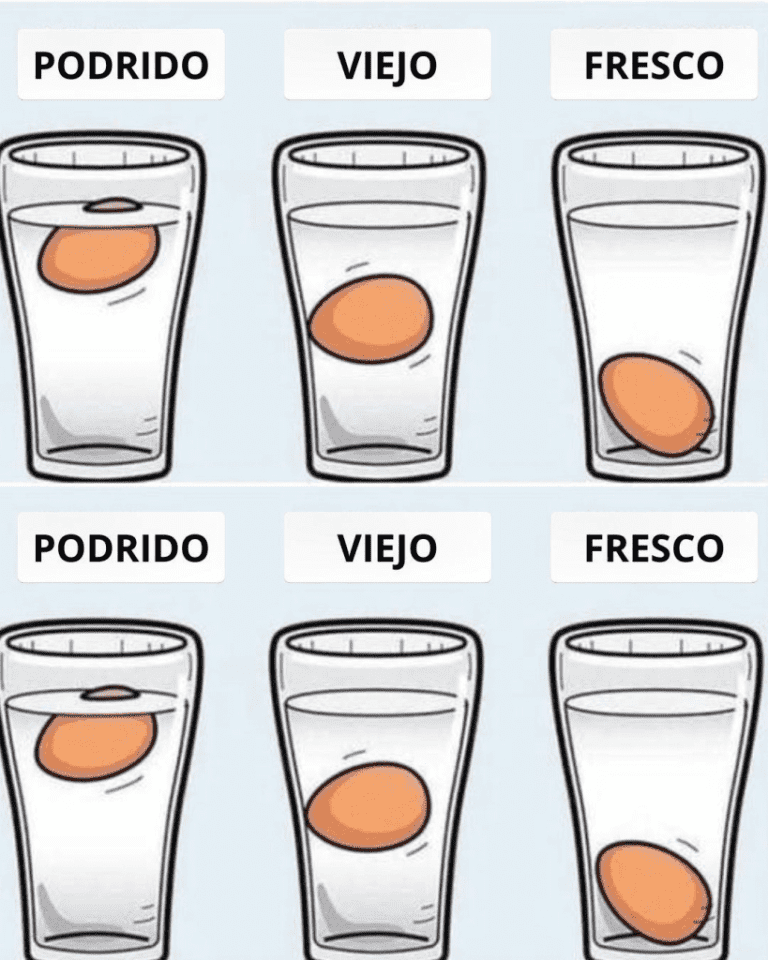
This is the most accurate, reliable, and widely used home method worldwide for checking egg freshness. You only need a container of water (preferably deep) and to follow these steps:
Step by step:
Fill a glass or container with cold water.
Carefully insert the egg.
Observe how it behaves.
Results based on egg position:
Egg Position Freshness Status Safe to eat?
Sinks and lies flat Very fresh Yes, ideal for any use
Sinks but stands upright Still good, but not as fresh Yes, best for boiled eggs
Floats Old or spoiled No, discard immediately!
Why does an old egg float?
Over time, the egg loses moisture through its porous shell, creating an internal air chamber. The more air it contains, the lighter it becomes, and therefore it floats.
Smell test: instinct never fails.
Another very accurate method is to crack the egg and smell it. A spoiled egg emits a strong, unpleasant, sulfurous odor that is very easy to identify. If you still have doubts after the water test, crack the egg into a separate container before mixing it with other ingredients.
Never smell it directly from the peel! If it’s rotten, the smell will be very strong.
Visual test: what your eyes can tell you.
When you open the egg, observe:
The yolk should be round, plump, and a uniform color.
The white should be thick and gelatinous, especially near the yolk.
If the yolk is cracked or very flat, and the white is completely runny, the egg is probably no longer fresh.
If you see black, green, or other strange-colored spots: throw it away!
How to read the date on packaging?
In many countries, eggs are sold with a “best before” date printed on the carton. This does not indicate an exact expiration date, but rather the period during which optimal freshness is guaranteed.
Generally, eggs can be stored for 3-4 weeks from the date of laying if stored correctly.
Tips for keeping eggs fresh longer:
Store them in the refrigerator, preferably in their original carton and away from strong-smelling foods.
Don’t wash them before storing. The shell has a natural protective coating that prevents bacteria from entering.
Don’t take them out of the refrigerator and put them back in. Temperature changes promote condensation and bacterial growth.
Avoid the refrigerator doors, as they experience greater temperature fluctuations. It’s best to place them in a stable area, such as the middle or back of the shelf.
Interesting Facts About Eggs:
An average egg contains 6 grams of protein and just 70 calories.
Brown and white eggs have the same nutritional value; only the breed of hen changes.
In the Middle Ages, eggs were used as a natural remedy and as currency.
Some professional chefs prefer eggs older than 7 days for cooked dishes, as they are easier to peel.
Conclusion
You don’t need fancy gadgets or expensive tests to know if an egg is fresh. With a glass of water and your senses, you can determine its freshness in seconds. Knowing this not only saves you money and prevents waste, but it also protects your health and that of your family.
So the next time you have doubts about those forgotten eggs in the refrigerator, do the glass test, look, smell… and decide with confidence!