Alleged sightings of Michael Jackson are frequently trending on digital platforms once again, making it essential to evaluate sources critically and avoid spreading unverified claims.
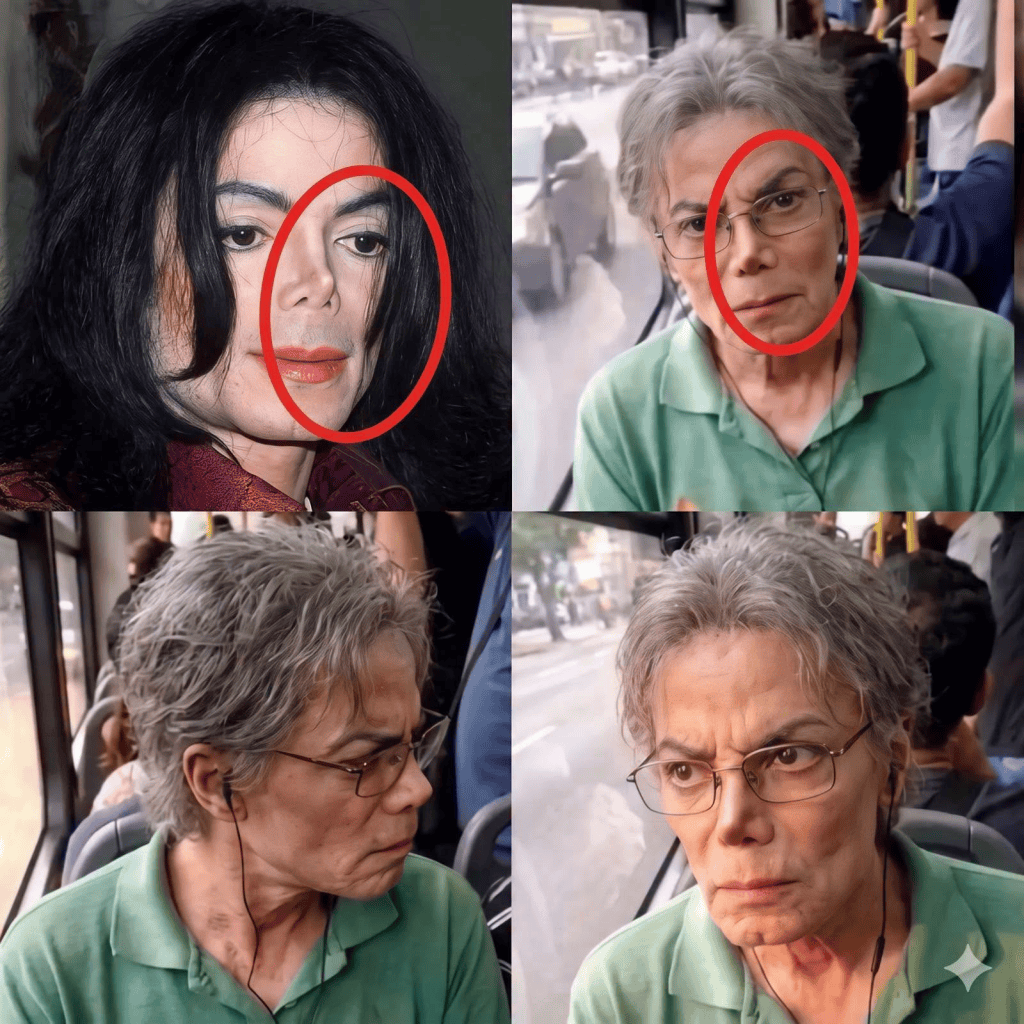
Every so often, predictable narratives surface across social media networks. Individuals will assert that they spotted the music icon inside a vehicle, walking down a street, shopping in a retail store, or captured within a distorted photograph. These posts typically leverage clickbait phrasing designed to manipulate curiosity, such as “nobody can believe it,” “see more,” or “the ultimate proof that changes everything”. While these uploads naturally attract the curiosity of dedicated fans, they ultimately amount to baseless internet myths.
The Undying Legacy of a Pop Culture Icon
Michael Jackson stands as one of the most transformative and impactful creators in the history of modern music. His passing on June 25, 2009, triggered a profound wave of global grief. Since that day, his immense artistic footprint has survived through his extensive discography, music videos, television documentaries, live tributes, and an ever-growing generation of younger listeners discovering his artistry. Alongside this legitimate commemoration, however, speculative survival theories and fabricated sighting claims have consistently circulated online.
Highly extraordinary claims demand equally substantial evidence.
An out-of-context video recording, a low-resolution photograph, or a passing physical resemblance to another person cannot validate a claim of this magnitude. Consequently, before interacting with or distributing this type of media, it is vital to analyze the mechanics of virality and learn how to separate authentic tributes from deceptive misinformation.
Why the King of Pop Dominates Public Attention
Michael Jackson was a generational figure who spent his entire life in the global spotlight, starting as a child star with The Jackson 5 before launching his solo career. His unique vocals, intricate choreography, cinematic short films, and fashion choices fundamentally re-engineered the global entertainment landscape for several decades.
Masterpieces like “Thriller,” “Billie Jean,” “Beat It,” “Smooth Criminal,” and “Black or White” maintain a heavy rotation across global radio stations. His signature dance steps, rhinestone glove, military-style jackets, and electrifying stage antics remain universally recognizable symbols, even among demographics born long after his prime years of touring. This deep emotional permanence explains why any speculative claim associated with his name instantly commands millions of impressions.
Verifiable Facts Surrounding His Passing
According to official medical records and legitimate news organizations, Michael Jackson passed away on June 25, 2009, in Los Angeles, California, at the age of 50. The official cause of death was determined to be acute intoxication from propofol—a highly potent clinical anesthetic—administered alongside a combination of other sedatives.
The death was legally classified as a homicide, culminating in the 2011 criminal conviction of his personal medical doctor, Conrad Murray, for involuntary manslaughter. Because these details are thoroughly documented matters of public record, any subsequent claims asserting that the artist is alive must be dismissed as fiction unless backed by verifiable proof. Deep nostalgia frequently drives followers to wish for an alternative reality, but emotional attachment to an entertainer must never be substituted for objective facts.
The Origin of Celebrity Sightings
Unverified sightings of deceased icons are a long-standing pop culture phenomenon. Similar patterns have historically surrounded legendary figures like Elvis Presley, Tupac Shakur, and Marilyn Monroe. These myths typically stem from:
- Photographs capturing lookalikes or professional tribute artists.
- Digitally manipulated video files and online pranks.
- Intricate conspiracy theories.
- Sensationalized media posts explicitly engineered to generate web traffic and ad revenue.
Because Michael Jackson possessed one of the most recognizable aesthetics on earth, any individual wearing fedora hats, dark aviator sunglasses, or sporting similar dark hairstyles can easily be exploited as “evidence” by tabloids. Furthermore, the subconscious desires of grieving fans play a major role. Accepting the loss of a deeply admired public figure can be psychologically difficult, and survival myths frequently function as an emotional coping mechanism to sustain hope.
Dissecting Clickbait Manipulation and Visual Deception
Sensationalist headlines deliberately rely on ambiguous statements rather than verifiable facts. Prompts like “a eyewitness reports,” “he was spotted inside a vehicle,” or “the shocking footage the media won’t explain” are specifically structured to provoke raw curiosity rather than inform the reader. The singular objective is to manipulate users into clicking, commenting, or sharing the link. Upon closer inspection, these links rarely provide substantive details, opting instead to recycle archival media or out-of-context imagery. A reliable news report will always clearly distinguish between an unverified rumor, an archive photo, a joke, or a legitimate update.
Furthermore, digital imagery cannot automatically be taken at face value. On the internet, a single photograph can circulate for years under completely fabricated contexts. Film scenes are routinely presented as real-life encounters, while professional impersonators are easily misidentified as the celebrity themselves. The widespread availability of advanced editing software, deepfake applications, and artificial intelligence tools makes generating deceptive media easier than ever before.